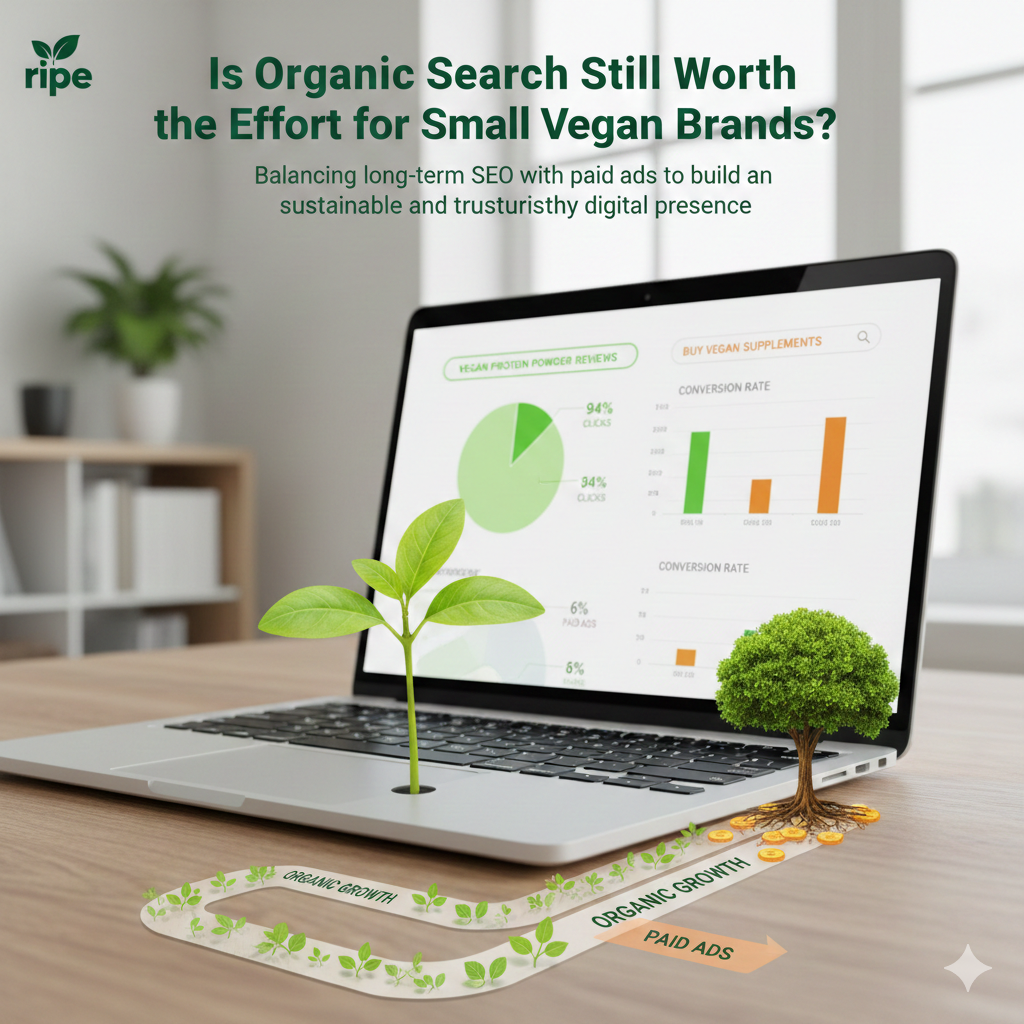
Balancing long-term SEO with paid ads to build a sustainable and trustworthy digital presence.
Want to listen on the go? Here's a conversation based on this article.
The compounding value of search
Many entrepreneurs feel like they are shouting into a void while search engine algorithms move the goalposts every week. This article will show you why organic search remains the most cost-effective way to build a sustainable vegan brand and how to stop being held hostage by rising ad costs.
The frustration of the pay to play cycle
Running a small business often feels like a constant battle between investing in the future and surviving today. You see competitors with massive budgets dominating the top of the search results, and it's tempting to think that "free" traffic is a relic of the past. When every click on a Facebook or Google ad costs several dollars and may not even lead to a sale, the pressure to find a more sustainable way to grow becomes overwhelming.
"Sustainable growth isn't about buying clicks; it's about earning the trust of your community through consistent value."
A common misconception is that search engine optimization (SEO) is a one-time task or a "dark art" that small players can't master. In reality, the complexity of search algorithms is actually designed to reward the very thing small vegan brands do best: providing authentic, high-quality information to a specific niche. While ads provide an immediate dopamine hit of traffic, they lack the compounding "snowball effect" that a well-structured organic presence provides.
How to solve the marketing mix problem
Prioritize trust and conversion rates
Organic search results aren't just about getting eyes on your page; they are about getting the right eyes. Data shows that organic results receive approximately 94% of all clicks on Google, compared to just 6% for paid advertisements [1]. Furthermore, organic search traffic often converts at a significantly higher rate than paid traffic because users perceive organic listings as more credible and authoritative. Studies indicate that SEO-driven traffic can convert at nearly double the rate of PPC traffic, specifically around 2.4% compared to 1.3% for ads [2].
Build a defensive digital asset
Think of SEO as "owning" your traffic and paid ads as "renting" it. When you stop paying for ads, the traffic disappears instantly, but a high-ranking blog post or product page can continue to generate leads for years after the initial work is done. This creates a defensive moat around your business. By focusing on "informational intent"—answering the specific questions your vegan customers are asking—you establish your brand as a leader in the space. This is especially vital as 53% of all web traffic currently originates from organic search [3].
Use a data driven hybrid approach
The most effective strategy isn't choosing one over the other, but using paid ads to fuel your organic strategy. Use small, targeted PPC campaigns to test which keywords actually lead to sales rather than just clicks. Once you have identified high-converting "winner" keywords through your ads, you can fold those terms into your long-term organic content strategy [4]. This ensures that your SEO efforts are backed by hard data, significantly reducing the risk of targeting the wrong audience.
Focus on your long term growth
The transition from relying on ads to building an organic powerhouse doesn't happen overnight, but it is the only way to escape the rising costs of digital advertising. Start by looking at your current data and identifying where you can provide the most value to your community.
- Audit your current website content to ensure you are answering the top five questions your customers ask before buying.
- Run a small, 30-day "test" ad campaign on a single high-intent keyword to validate conversion potential before committing to long-form content.
- Dedicate at least four hours a week to updating old blog posts with fresh data and improved user experience signals like faster loading times.
References
- Digital Silk. (2025). Organic Vs. Paid Search Statistics | Top Surprising Stats For 2025.
- Sagapixel. (2025). SEO Vs. PPC Statistics In 2025: Key Data-Driven Insights Revealed.
- Improvado. (2025). SEO vs PPC: The Ultimate Guide to Finding Your Perfect Marketing Mix.
- Search Engine Journal. (2025). How To Get The Perfect Budget Mix For SEO And PPC.